The conditions behind a bloom, for each water body.
Water temperature, nitrogen, phosphorus, sunlight and residence time. BASIN calculates the five drivers of algal growth every day, so every alert comes with reasons operators recognise.
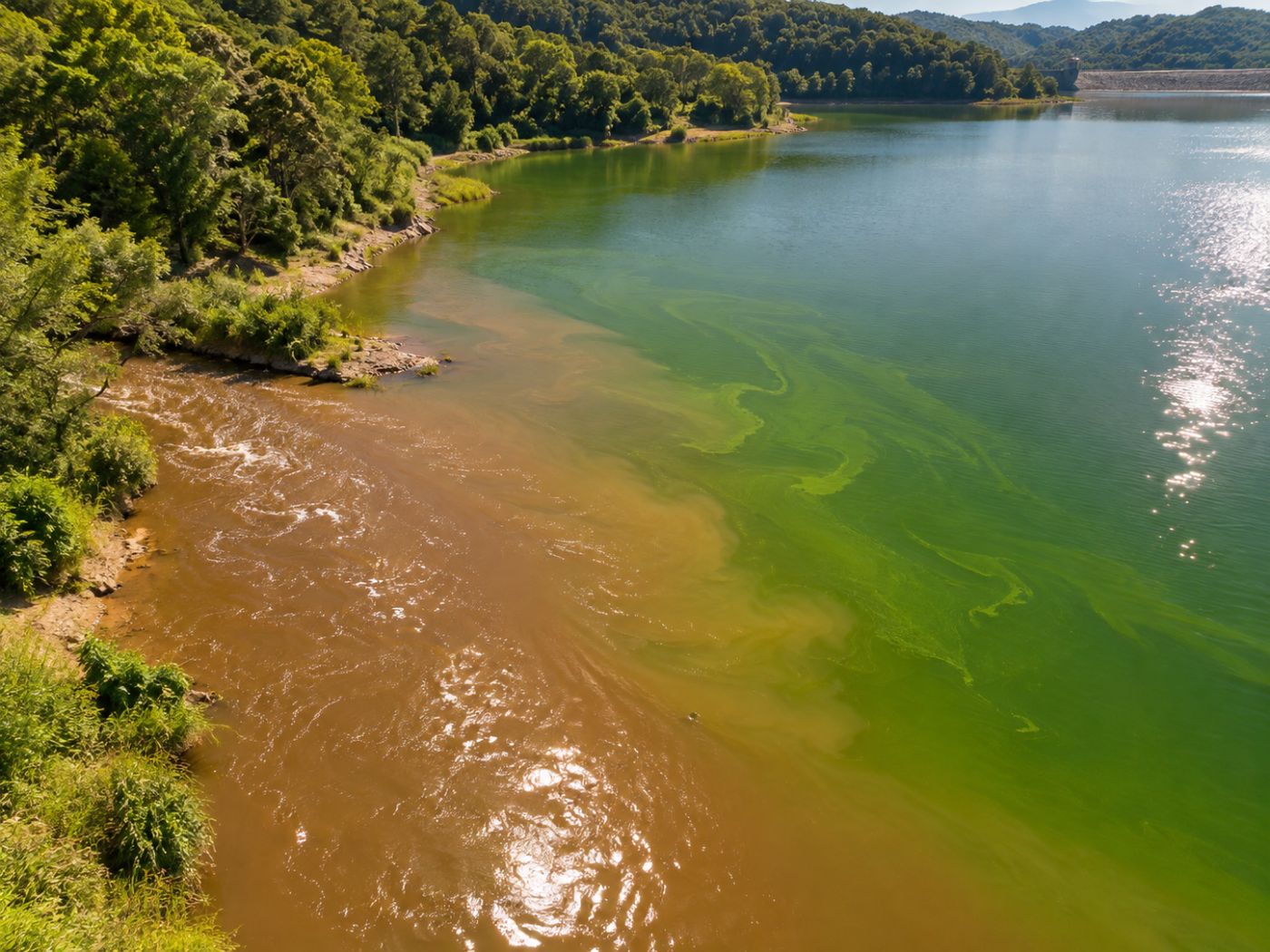
Why five drivers
Why water will turn green matters more than whether it is green today.
Blooms grow fast when warm water, plenty of nutrients, strong sunlight and still water come together. Watching these conditions shows risk building up before the water changes colour.
- Water temperature: Landsat surface temperature
- Nitrogen and phosphorus: public monitoring data first, satellite proxies when missing
- Sunlight: weather data
- Residence time: how long water stays, from flow data
The five drivers
Every alert shows its cause.
The five drivers are summarised in one table per water body and updated daily. When an alert appears, you can see which driver pushed the growth rate up.
Water temperature
Cyanobacteria grow fast in warm water. Read from Landsat surface temperature.
Nitrogen
A nutrient for algae. Measured values first, satellite proxies when missing.
Phosphorus
A key nutrient for blooms, handled the same way as nitrogen.
Sunlight
Longer, stronger sunlight speeds up photosynthesis and growth.
Residence time
The longer water stays, the more algae build up. Calculated from flow.
Status table
All five drivers in one table for each water body, updated daily.
Specification
Data, method and output
| Item | Detail |
|---|---|
| Data | Landsat surface temperature, public monitoring data (N, P), weather, flow |
| Resolution & update | 30 m, daily |
| Output | Status table of temperature, N, P, sunlight and residence time per water body |
FAQ
Frequently asked questions
Does it work where there is no monitoring data?
Yes. If nitrogen and phosphorus measurements are missing, BASIN uses satellite proxies, and switches to measured values when they arrive.
How do the drivers feed the alerts?
The five drivers give a growth rate, and weather forecasts are added to produce the alert level 3 to 7 days ahead. That is why each alert shows which drivers caused it.
Why does residence time matter?
Fast-moving water rarely lets algae build up; still water does. When dam releases change, residence time changes too, and the alerts reflect it.
Related pages
Work with us
Start with a satellite screening of your water.
We screen your reservoirs and intakes from public satellite data first, then compare the results with your own field measurements. No equipment needs to be installed.